
Lean headcount is a design choice at a neobank: the support team that served the first hundred thousand customers is expected to carry two million. Neobanks are rightly looking at automation to close the gap, facing the same regulatory scrutiny of a traditional bank, but with none of the extra headcount to fall back on. That makes choosing AI agents for neobanks a different exercise, one defined by how much of an operation each agent can truly own end to end. To help make these decisions easier, this guide maps the AI agent companies doing real work for neobanks across four jobs: customer operations, onboarding and identity, fraud and financial crime, and credit.
Who are the best AI agents for neobanks in 2026?
Gradient Labs is the standout for neobanks because it runs the work customers actually see, and that work carries the highest volume in the bank: frontline support on chat and voice, plus back-office work like disputes, collections, and KYC, on one platform with compliance built in. Volume like that can crush a small ops team, and falling behind shows up fast as unhappy customers and a sliding CSAT, a risk a growing neobank cannot afford.
That is why Gradient Labs comes first: this is the layer a neobank has to get right to scale. For the fuller set of use cases this layer covers, see our guide to the best AI use cases for fintechs. The remaining seven are specialists, each owning a job the customer never sees. Persona and Middesk run onboarding and identity, Sardine, Unit21, ComplyAdvantage, and Oscilar cover fraud and financial crime, and Taktile runs credit decisioning. Most neobanks end up running several of these together, so the real choice is which agent should own each job in your stack.
Platform | What it does | Where it fits in a neobank | Compliance posture | Best for |
|---|---|---|---|---|
Gradient Labs | Frontline support and back-office work (disputes, collections, KYC) | The layer customers talk to, and the case work behind it | 20+ FS-native guardrails on every turn, SOC 2 Type II, US/UK/EU coverage | Absorbing growth without scaling the support team |
Persona | Identity verification for consumer onboarding | The sign-up flow | Compliance-grade IDV for regulated platforms | Cutting sign-up drop-off without loosening KYC |
Middesk | Business identity and KYB verification | SMB onboarding | AI agents purpose-built for CIP, CDD, and EDD | SMB neobanks automating business verification |
Sardine | Fraud, AML, and compliance with agentic investigation | Fraud and FinCrime | FS-built risk platform | Fraud, AML, and compliance on one platform |
Unit21 | Agentic fraud and AML, detection through investigation | Fraud and AML operations | Human-readable audit trail, 2026 RegTech100 | Detection and case investigation in one place |
ComplyAdvantage | AML screening and monitoring with agentic alert handling | The screening data layer | Regulatory defensibility built into agentic workflows | Screening and monitoring coverage under the stack |
Oscilar | AI risk hub across fraud, AML, credit risk, and onboarding | Risk-decisioning layer | Used across 100+ financial institutions | One risk layer across fraud, compliance, and credit |
Taktile | AI decision platform for onboarding, underwriting, and fraud | Credit decisioning | Decisioning with human oversight for regulated FS | Neobanks adding credit products |
What should a neobank look for in an AI agent?
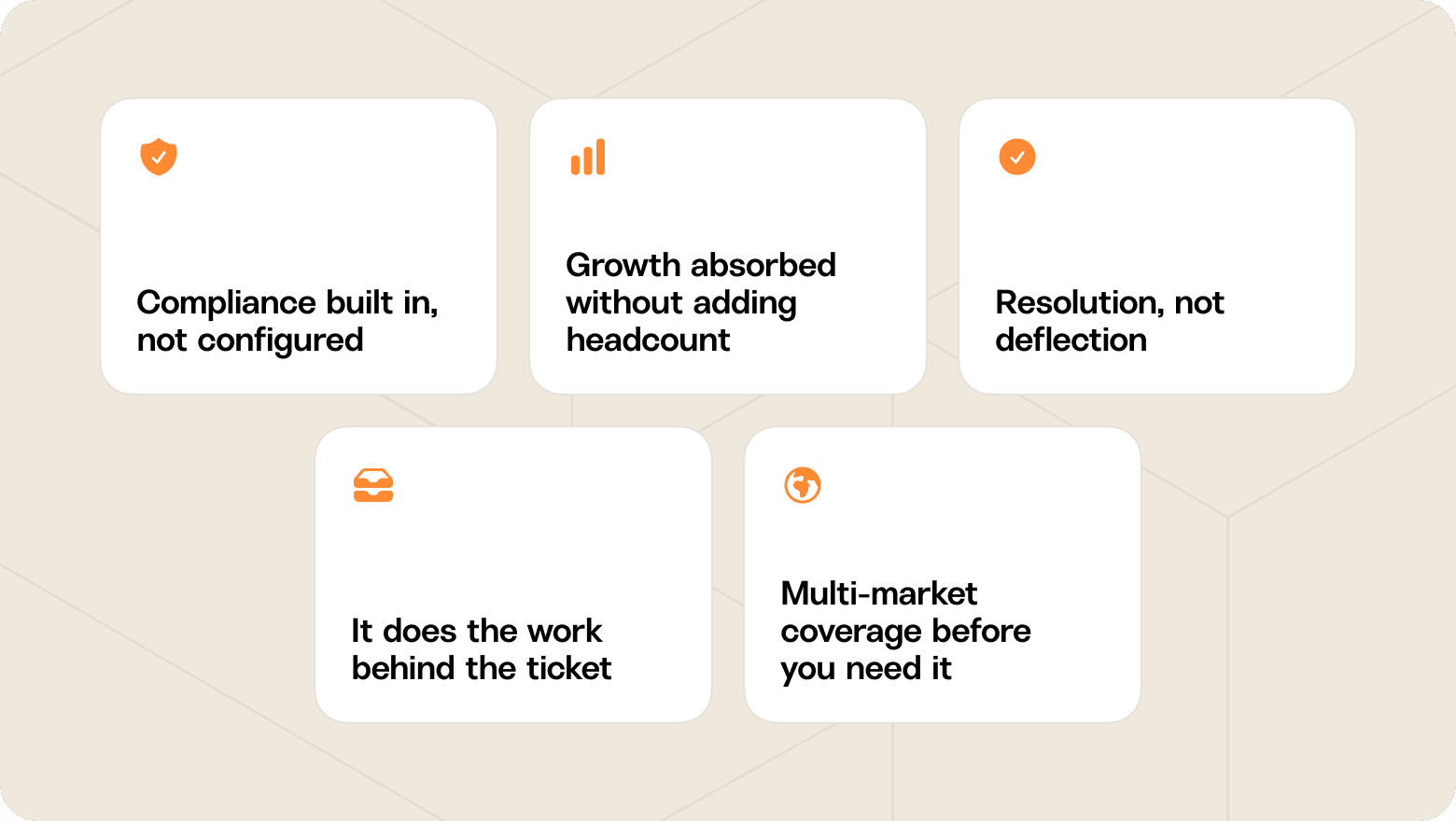
The evaluation looks different than it does at a tier-one bank, where an infosec review can outlast a neobank's whole product cycle. A neobank needs the same compliance depth without a team to hand-build it. We cover the bank-side evaluation in our guide to the best secure AI agents for banking, and the fuller diligence process in how to choose an AI agent vendor for financial services. For a neobank, five criteria matter most:
Compliance built in, not configured: with a general-purpose AI agent, keeping the agent compliant is your team's job. Someone has to tune the guardrails, maintain the escalation rules, and check that complaints and vulnerable customers are being caught, and that work never ends. Look for guardrails that run on every turn out of the box: vulnerability and complaint detection, tipping-off prevention, and coverage across US (UDAAP, Reg F), UK (FCA Consumer Duty), and EU (GDPR, EU AI Act) rules.
Growth absorbed without headcount: your customer base can double in a year and your ops team cannot. The agent should take the new volume as it arrives, so scaling the bank stops meaning scaling the queue.
Resolution, not deflection: most AI for customer support is measured on deflection, and deflection-rate tools typically stall at 60–65%, because what remains are complex investigations that need someone to go into systems, apply judgement, and mediate an exchange. An agent that resolves the case end to end breaks that ceiling.
The work behind the ticket: a chargeback to investigate, a KYC review to chase, a negative balance to collect. If the AI customer service agent stops at the reply, the manual work underneath it stays manual.
Multi-market coverage before you need it: neobanks add markets faster than they add compliance staff. An agent built around one market's rules cannot safely run the next one. For the cross-border support problems that arrive with each new market, see how AI agents close the gap on banking problems abroad.
Which AI agents run customer operations?
1. Gradient Labs: best for running neobank customer operations end to end
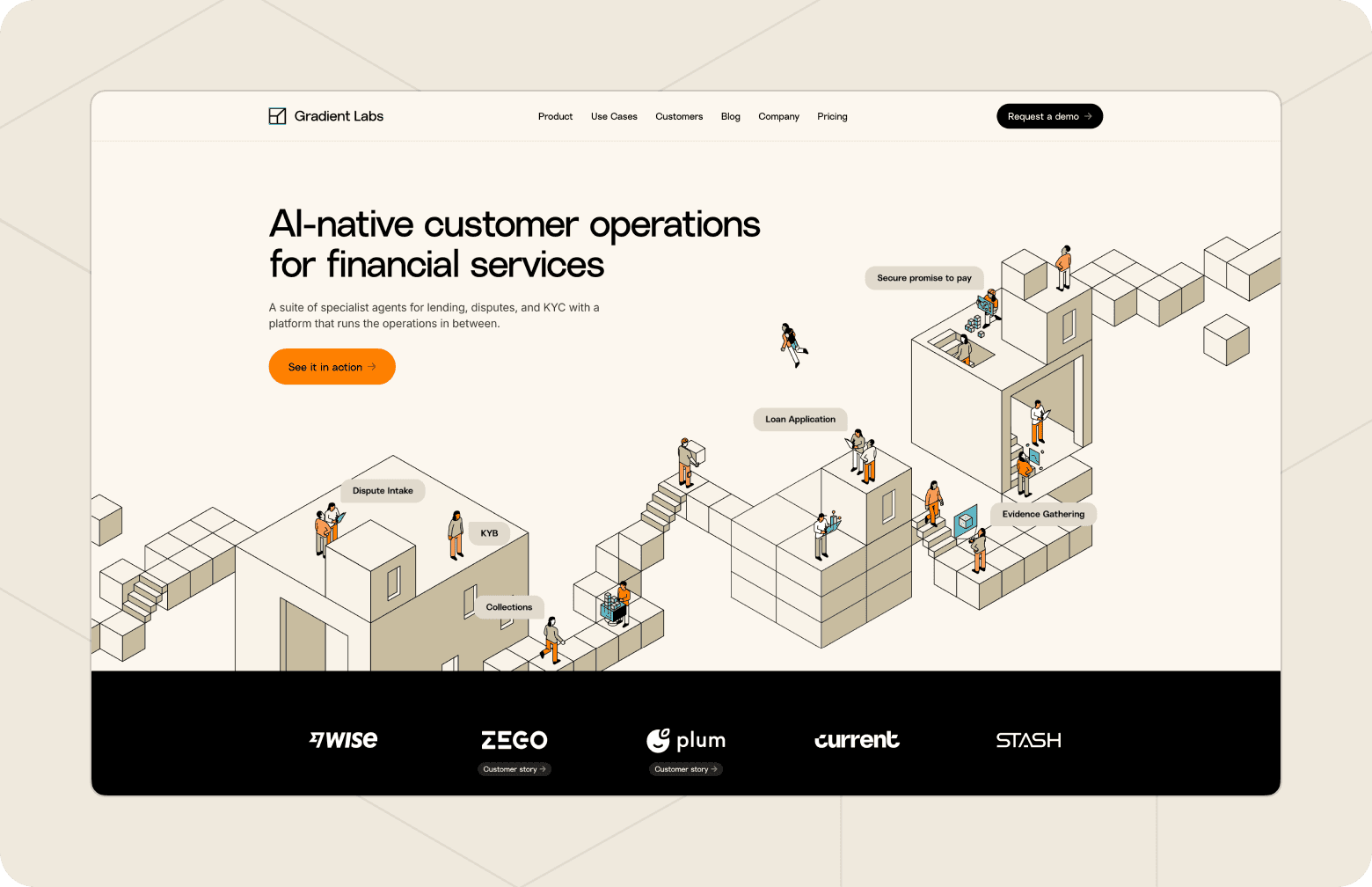
Gradient Labs builds customer service AI agents for financial services and runs frontline conversational AI and the back-office case work behind it as one system. Neobanks are its home ground: notable logos include Wise, Current, Rho, Stash, and Pockit, and it has run half a million customer conversations at 98% QA, beating human agents, at a large European digital bank at scale. A chargeback starts as a worried message, runs investigation and evidence work in the back office through the Disputes Agent, and closes back with the customer, without a human carrying the case across the gap.
Security and compliance: 20+ pre-built financial-services guardrails run on every turn, covering US (FDCPA, TCPA, Reg F, UDAAP), UK (FCA Consumer Duty, CONC, Breathing Space), and EU (GDPR, EU AI Act) regulation. SOC 2 Type II is certified, data is encrypted at AES-256, and zero-day retention agreements cover every LLM sub-processor. The Vanta Trust Centre is public for due diligence, and the founders ran Monzo's data organisation under FCA regulation, so the compliance depth predates the product.
Deployment: the delivery team runs the migration from whatever you run today, so a non-technical ops lead owns the agent without staffing an AI team. Agents typically go live in days. Once a use case is scoped, the deployment is guaranteed: if we don't deliver what we said we would, you get your money back.
Resolution: 60% from day one, climbing to 80–90% in mature deployments as the delivery team supercharges the agent in production.
Honest limitation: Gradient Labs does not verify identities at sign-up, score credit, or monitor transactions. It runs the customer-facing operations around those systems, which is why the specialists below belong in the same stack rather than on a rival shortlist.
Best for: consumer and SMB neobanks where support volume, disputes, collections, and KYC case work are outgrowing the team.
"We truly think that if people have a problem and you solve it, that builds brand loyalty. That's why customer resolution is so important. With Gradient Labs, we have an AI agent that's actually resolving problems, boosting our CSAT rating, and absorbing growth without us having to scale the team. I'm confident that with this partnership, we can get to 100% automation."
Michiel Smet, Head of Operations, Pockit
Which AI agents run neobank onboarding and identity?
Onboarding is a neobank's growth engine, and identity checks are where sign-ups die. The job splits by segment: a consumer neobank has seconds to verify a person before they abandon the flow, while an SMB neobank has to verify a business, which is slower work across registries, ownership structures, and documents.
2. Persona: best for consumer identity verification
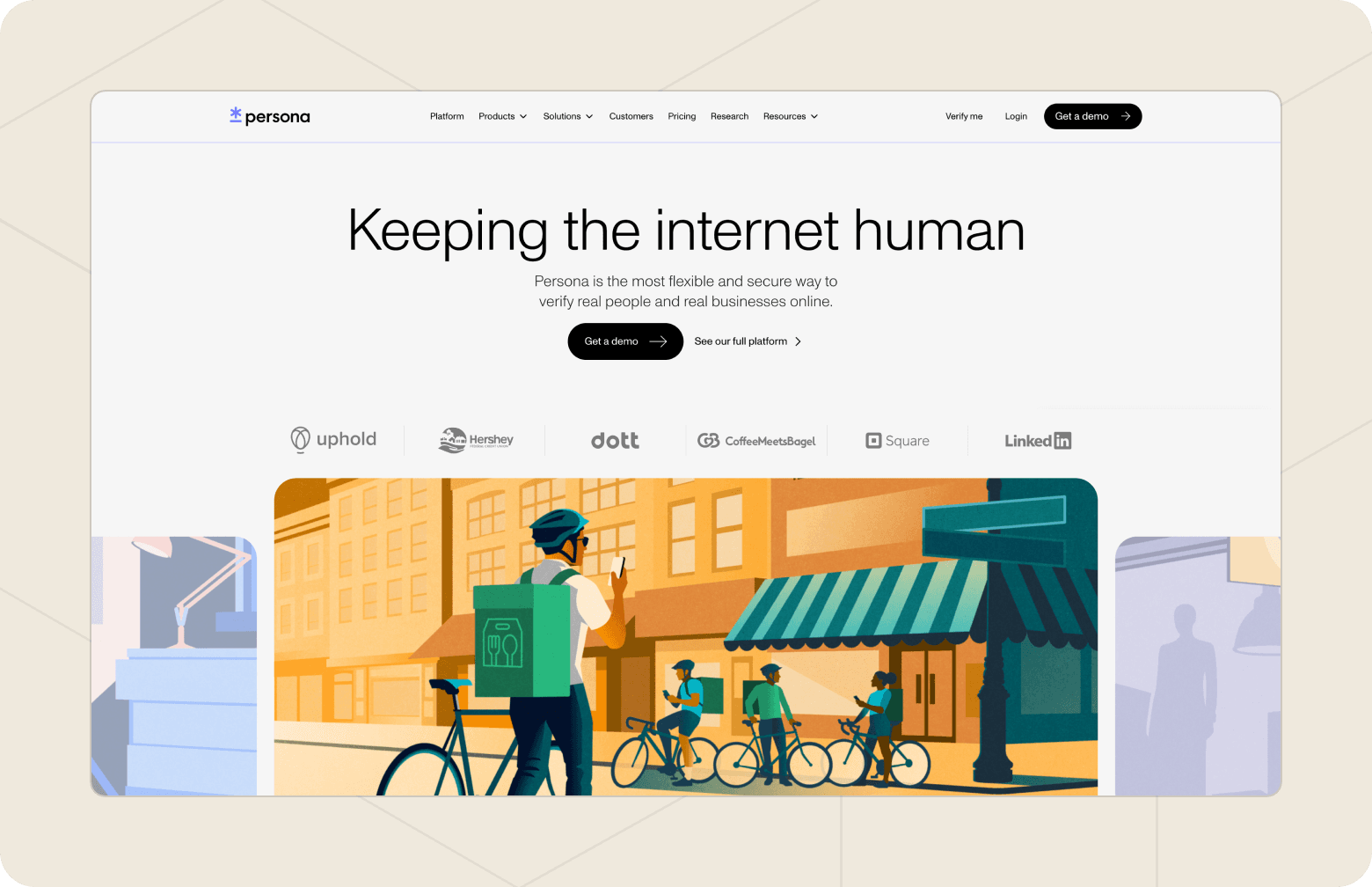
Persona runs identity verification for consumer onboarding: document checks, selfie matching, and configurable KYC flows that keep drop-off low without loosening the checks. It raised a $200M Series D at a $2B valuation in 2025, co-led by Founders Fund and Ribbit Capital, to build what it calls the verified identity layer for an agentic world, and its customers include OpenAI and Heritage Bank.
Best for: consumer neobanks cutting sign-up drop-off without loosening KYC.
3. Middesk: best for KYB at SMB neobanks
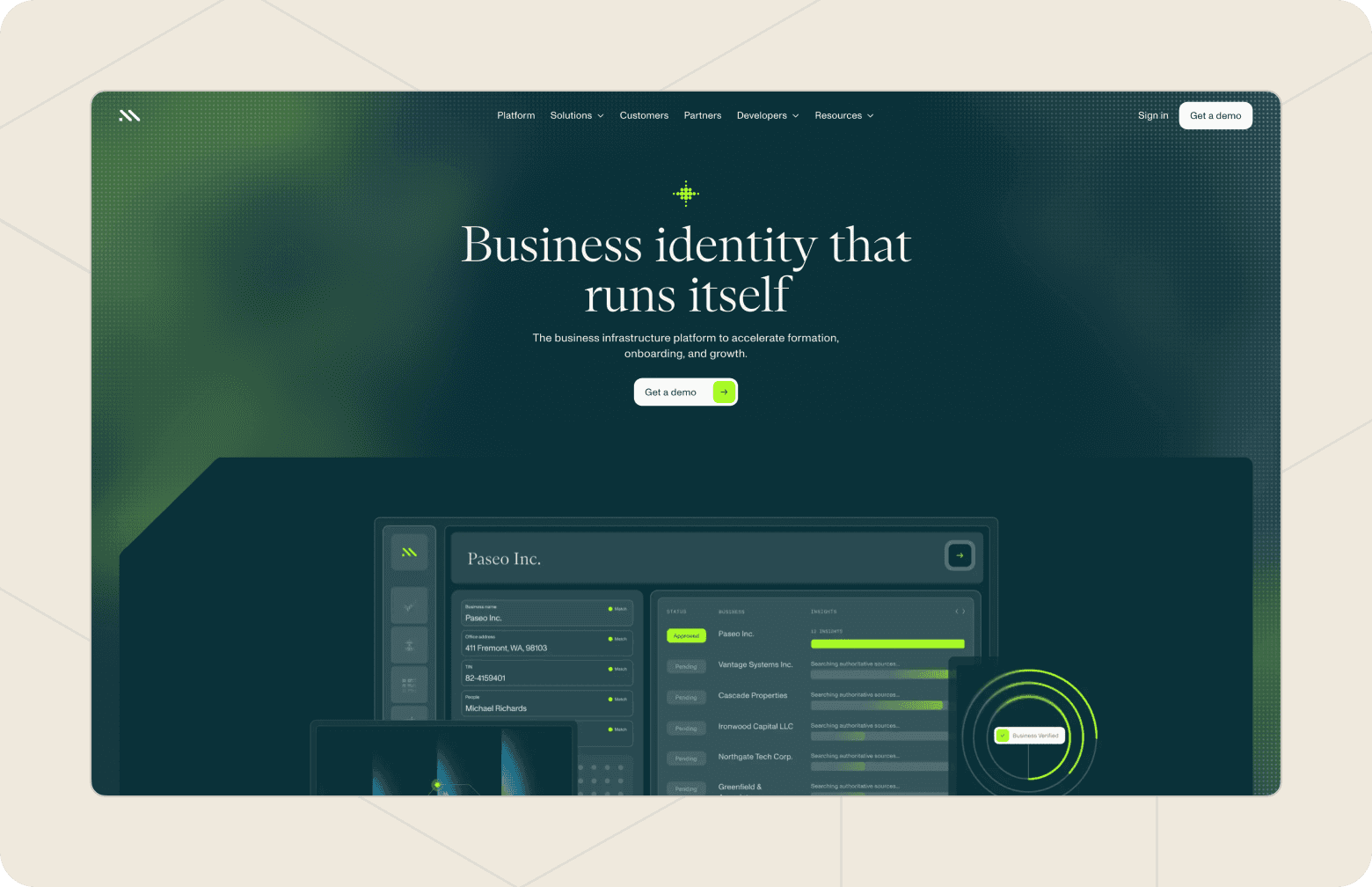
Middesk verifies businesses rather than people, with AI agents purpose-built for CIP, CDD, and EDD checks that investigate ownership networks across 400+ data sources and produce audit-ready decision documentation. It verifies around 7 million businesses a year, and its customer list reads like the SMB fintech market itself: Brex, Mercury, Ramp, Cash App, and Revolut.
Best for: SMB neobanks automating business verification between sign-up and first deposit.
Which AI agents cover fraud and financial crime for a neobank?
Financial crime is where a neobank's licence lives or dies, and it is the first part of the stack a regulator examines. The vocabulary here is false positives as much as fraud caught: over-blocking good customers at onboarding costs growth, so the strongest platforms work both sides. These four each own a different piece.
4. Sardine: best for fraud, AML, and compliance on one platform
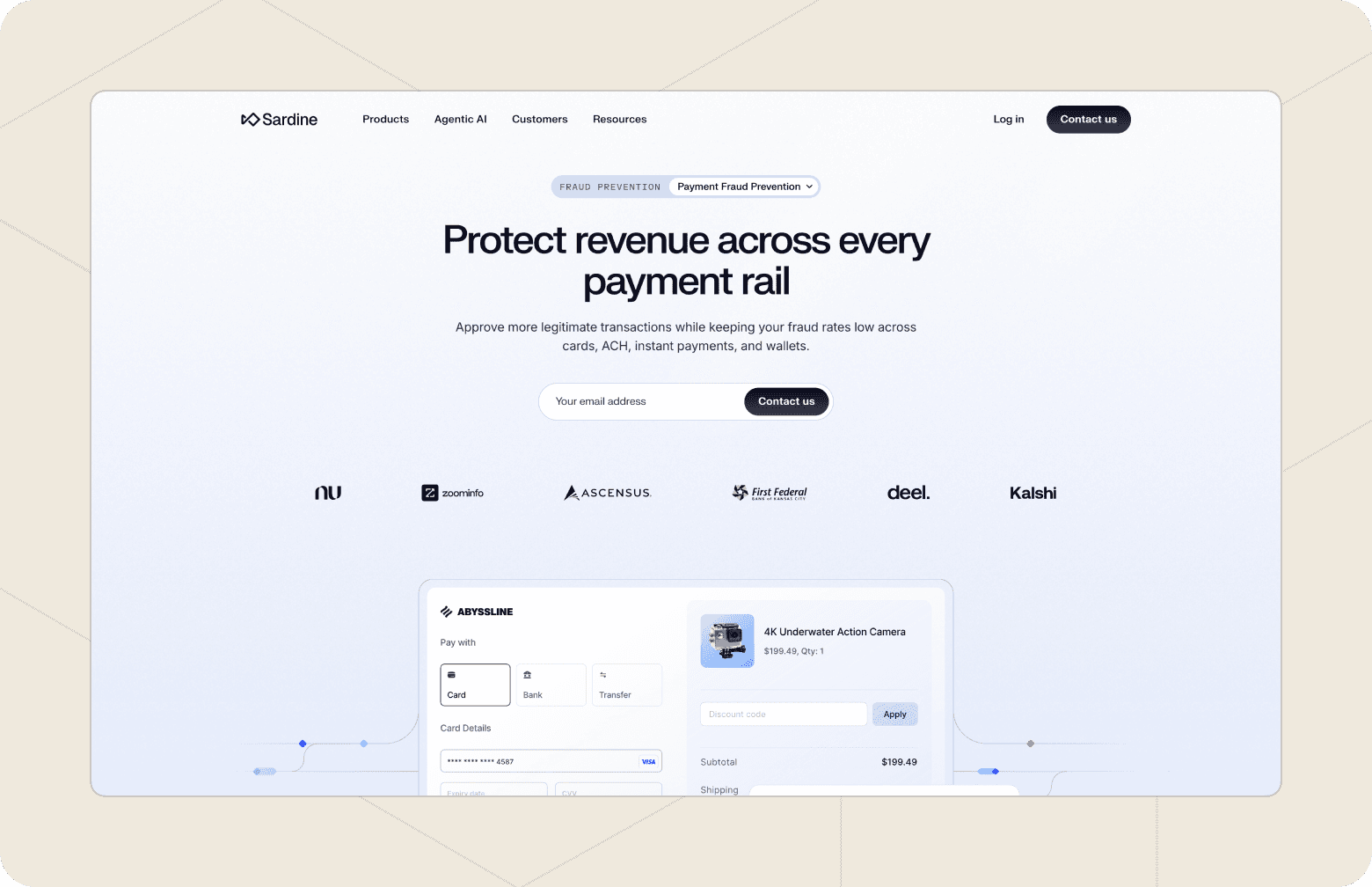
Sardine folds fraud, AML, and compliance into one risk platform, with an agentic investigation layer that gathers the evidence and reads the context on a case before an analyst opens it. More than 300 companies use it, including FIS, Deel, and GoDaddy, and it has raised $145M to date, with a $70M Series C in 2025. Its roots are fintech-native, which shows in how quickly it integrates with a modern stack.
Best for: neobanks that want fraud, AML, and compliance under one risk platform rather than three tools.
5. Unit21: best for detection-to-investigation in one loop
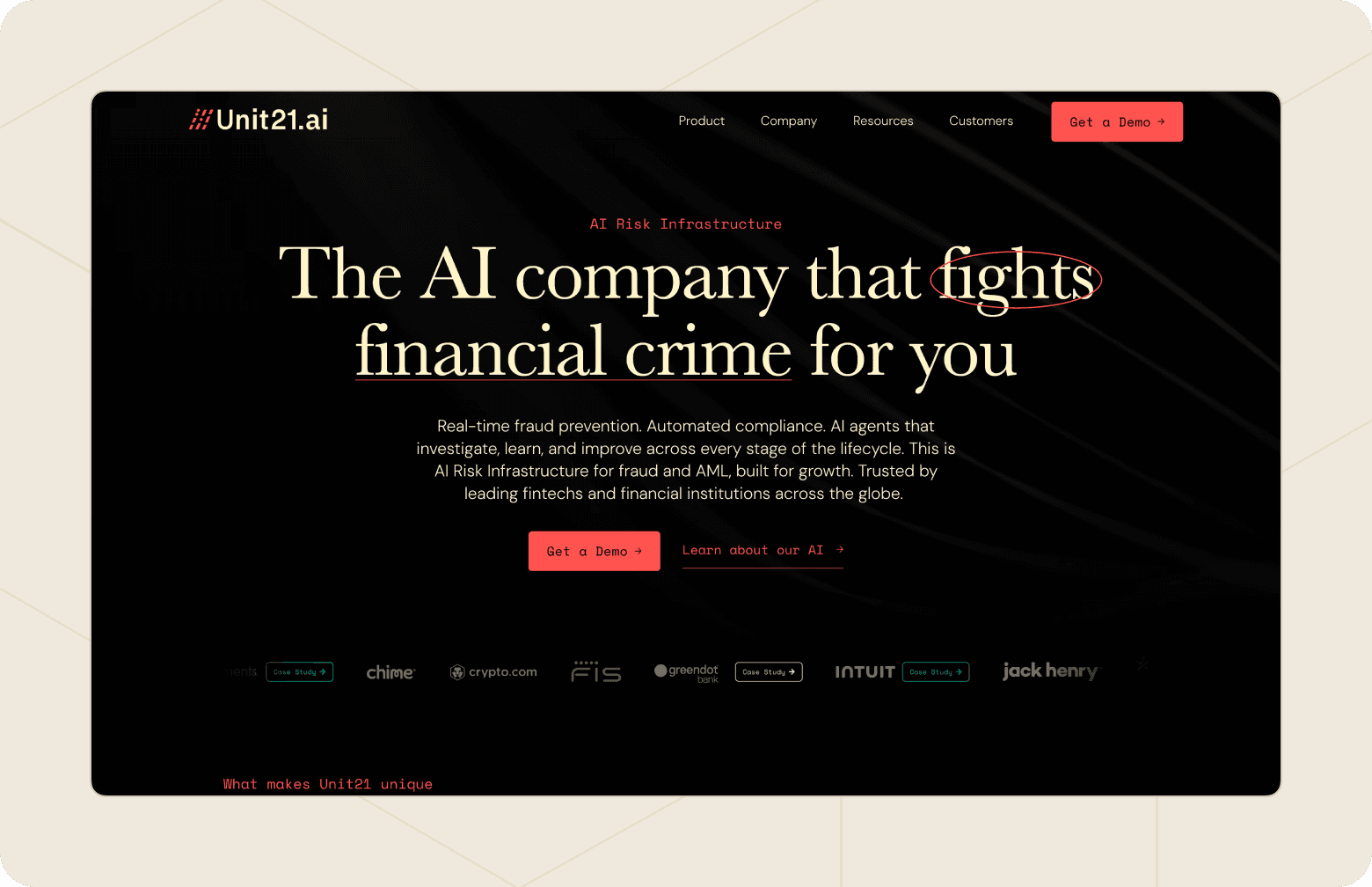
Unit21 takes an alert from detection through investigation with agents that show their work in a human-readable audit trail as they go. Used by 200+ institutions, including Chime, Intuit, and Sallie Mae, it has raised around $92M and was named to the 2026 RegTech100.
Best for: risk operations teams that want detection and case investigation in one place.
6. ComplyAdvantage: best for screening and monitoring coverage
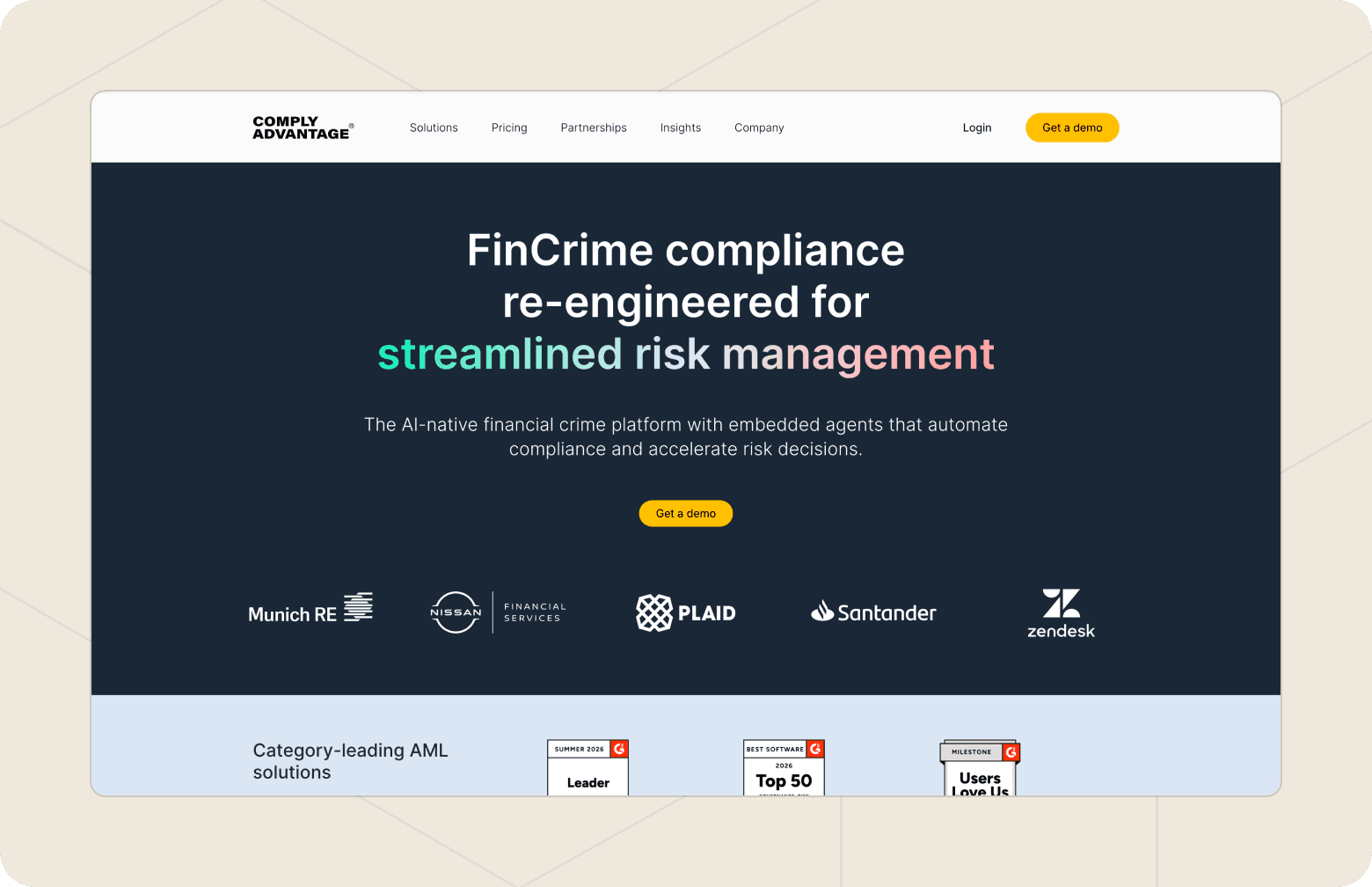
ComplyAdvantage runs AML screening and monitoring on its AI-native Mesh platform: sanctions, watchlists, PEPs, and adverse media, with agentic workflows the company says resolve up to 85% of routine alerts autonomously while keeping regulatory defensibility. Customers include Mollie, Plaid, and Santander. It is the data layer under the investigation tools above.
Best for: neobanks that need screening and monitoring coverage as the foundation of the FinCrime stack.
7. Oscilar: best for a unified risk layer
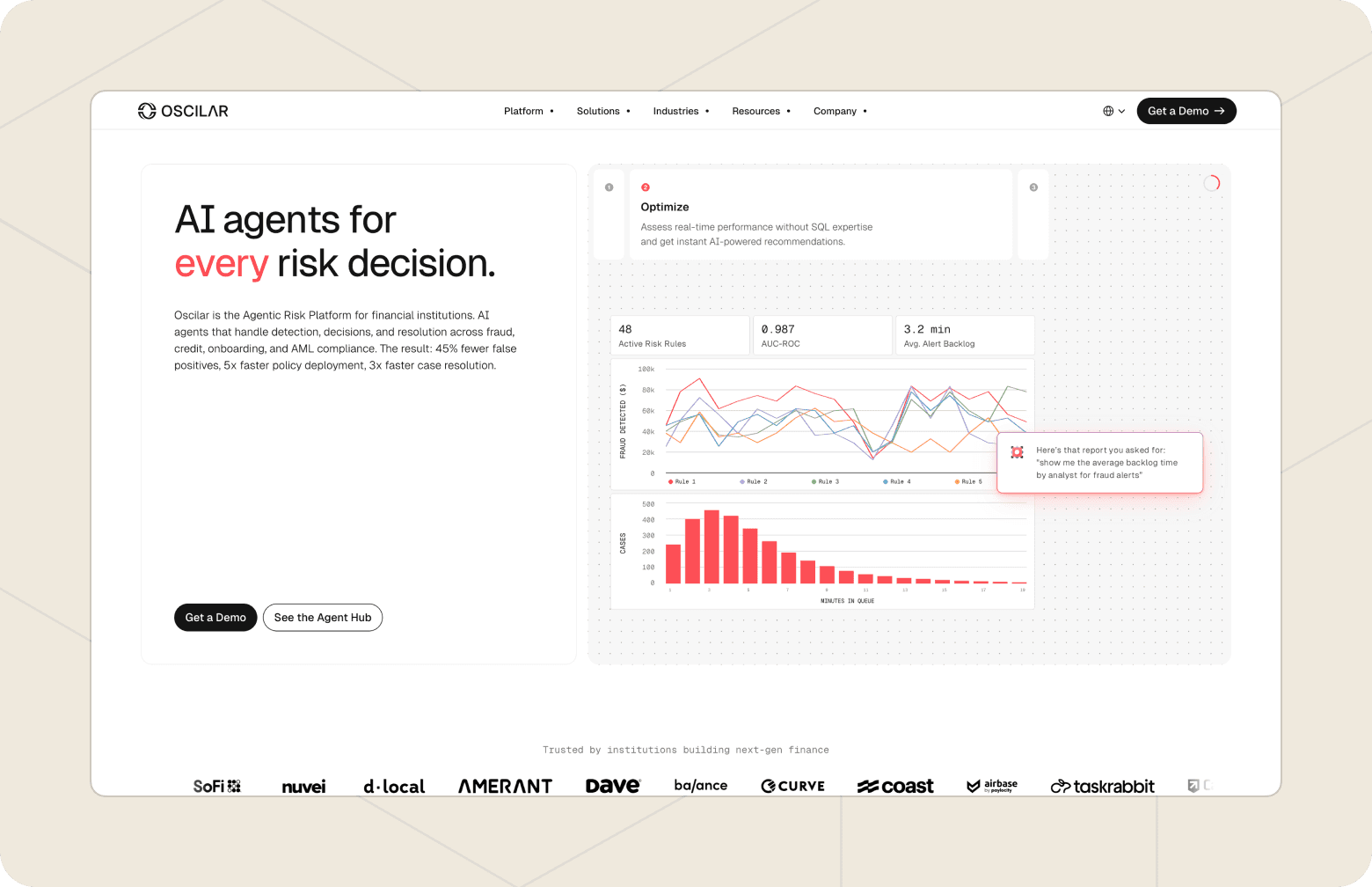
Oscilar covers fraud, AML compliance, credit risk, and onboarding in a single AI risk hub, in use across 100+ financial institutions including SoFi, MoneyGram, and Nuvei. Apache Kafka co-creator Neha Narkhede founded it and bootstrapped it with no outside funding; it suits teams that want one decisioning layer rather than separate tools per risk type.
Best for: neobanks consolidating fraud, compliance, and credit risk into one layer.
Which AI agents help a neobank launch credit products?
Credit is the revenue line most neobanks add second, and it fails in two distinct places: the decision (who to lend to, at what price) and the operation after it (servicing, repayment support, arrears). Plenty of young lenders have learned that pushing money out the door is the easy half; getting it back needs an operation they never built.
8. Taktile: best for credit decisioning
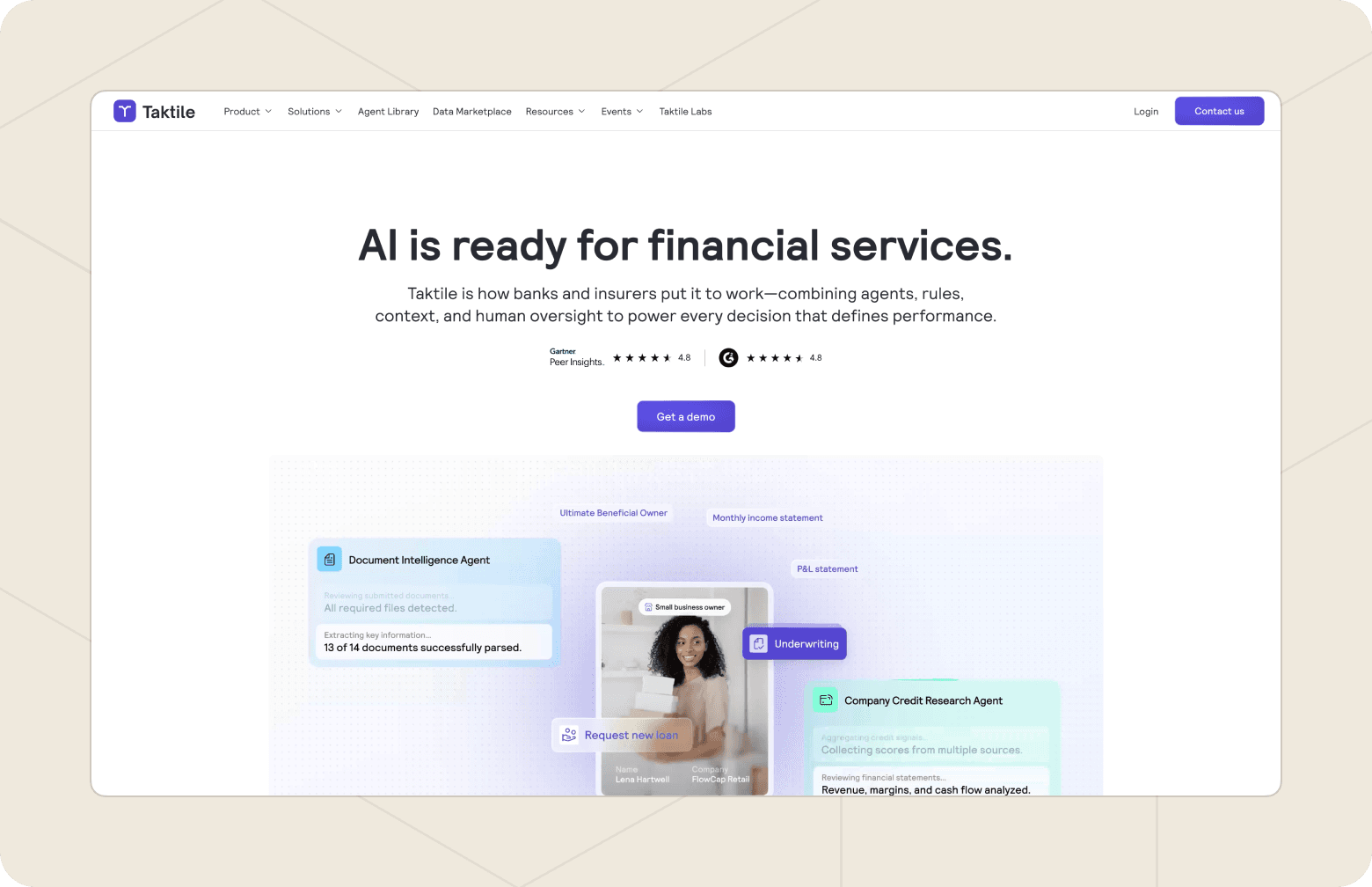
Taktile is an AI decision platform for financial services, combining AI agents, business rules, and human oversight across onboarding, underwriting, and fraud decisions. It raised a $110M Series C led by Goldman Sachs, and its customers include Monzo, Mercury, and Kueski, which makes it the most neobank-native decisioning infrastructure available.
Best for: neobanks adding credit products that need decisioning infrastructure without building it in-house.
Taktile decides; someone still has to run the borrower relationship that follows. That work, repayment questions, hardship conversations, and collections, is customer operations, and Gradient Labs' Lending Agent runs it across the borrower lifecycle. Our guide to deploying AI agents in lending walks through that side of the operation.
How do these AI agents for neobanks fit together?
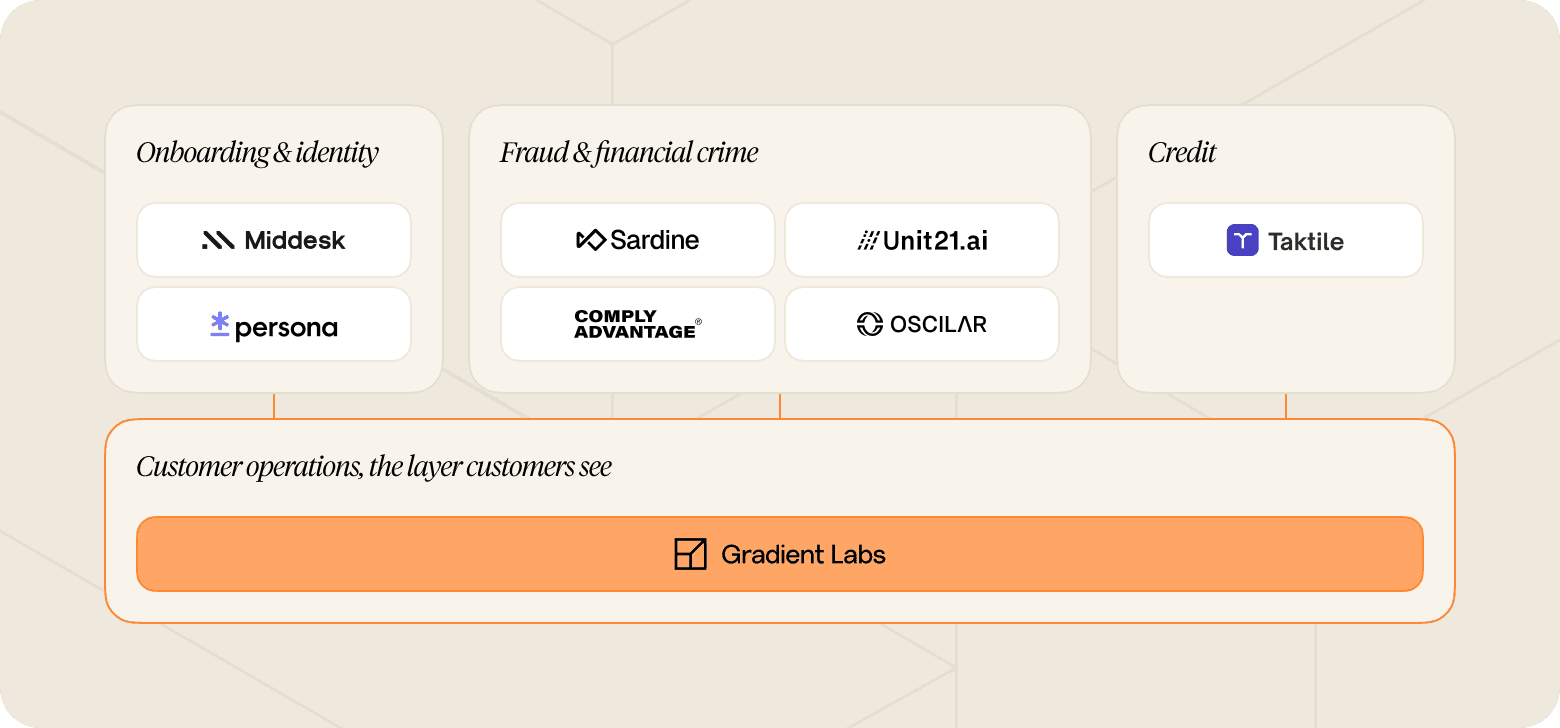
Follow one customer through the bank. Persona or Middesk verifies them at sign-up, Sardine, Unit21, and ComplyAdvantage watch their transactions, Oscilar scores the risk, and Taktile decisions their credit line. None of that work talks to the customer. The moment it does, when a flagged payment becomes a worried message, a KYC refresh becomes a document chase, or a missed repayment becomes a difficult call, it lands in customer operations. That is the layer Gradient Labs runs. The specialists in this guide complement it rather than compete with it: they run the checks and the decisions, while Gradient Labs runs the customer service AI on the frontline and the case work behind it.
Which AI agent should your neobank choose?
Support volume is outgrowing the team, and back-office work like disputes, collections, and KYC is still manual: Gradient Labs is the standout.
Sign-ups are dying at the identity check: Persona for consumer onboarding, Middesk for KYB.
Fraud and AML are spread across too many tools: Sardine or Oscilar for one risk layer, Unit21 for detection through investigation.
Screening and monitoring need a stronger data layer: ComplyAdvantage.
You are launching credit: Taktile for the decision, Gradient Labs' Lending Agent for the borrower operation around it.
If your neobank's support queue is growing faster than the team, book a demo with Gradient Labs and see the agent on your own use case.


Elizabeth Shew leads Brand and Advocacy at Gradient Labs, where AI agents handle customer support and back-office work for banks, lenders, and fintechs. Before that, she led customer marketing at Mastercard and built Dynamic Yield's customer marketing programme from the ground up, a decade spent turning customer results into industry-shaping stories. She writes about how support and operations teams actually put AI and technology to work. Before tech, she was a professional dancer in NYC.